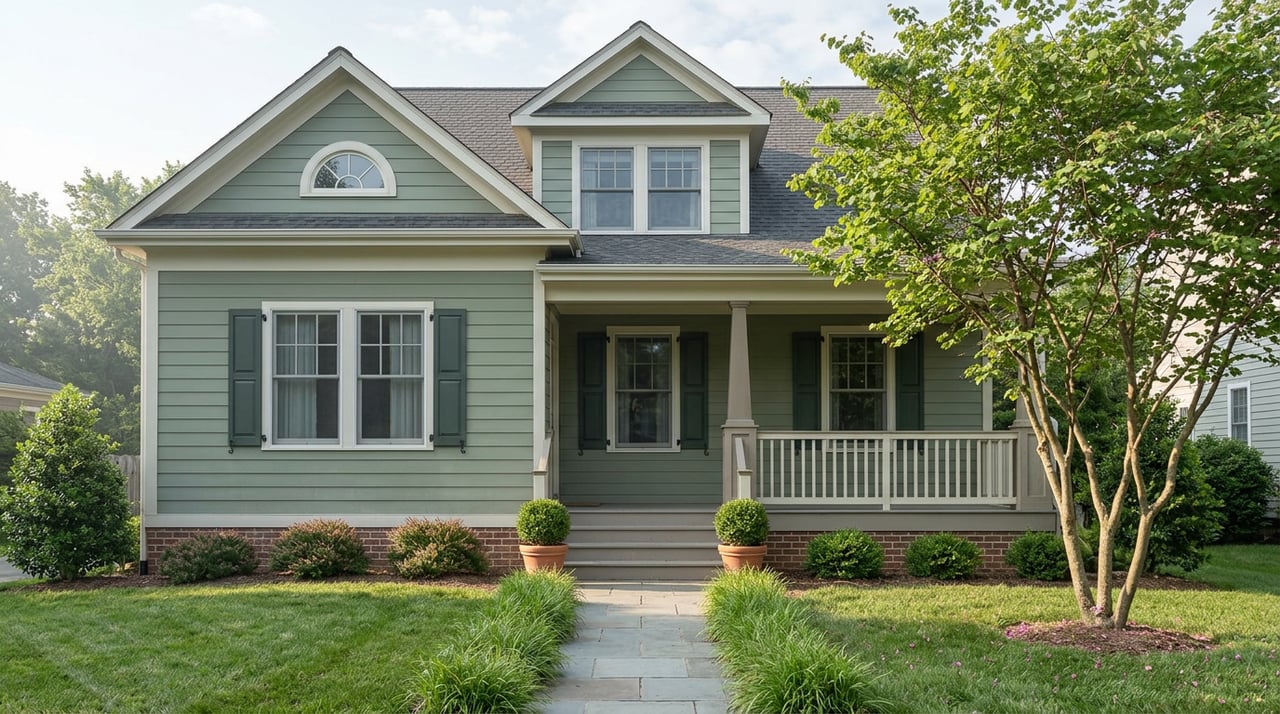
Virginia Flaherty was out walking her dog when she came across a hearing notice stapled outside 6111 Walnut St., a century-old Victorian with a mansard roof, a wraparound porch, and a turret, sitting across Emerson Street from Sacred Heart Elementary School. The notice announced a Zoning Board of Adjustment hearing on a proposal to tear the house down and put up a six-unit apartment building. Flaherty had known the property owner for twenty years. He had asked her, personally, not to oppose the plan. She did anyway, and started emailing neighbors, because as far as she could tell, nobody else was going to.
That last part matters more than it sounds like it should. In most Pittsburgh neighborhoods, a developer proposing something like this has to sit down with residents before the case ever reaches a public hearing. In Shadyside, that requirement simply doesn't apply, because the neighborhood doesn't have the organization that would enforce it.
What a registered community organization actually does
Pittsburgh adopted its Registered Community Organization ordinance in 2018. An RCO is a nonprofit group registered with the city's Department of City Planning to represent a specific geographic area, and one of its core functions is guaranteed: a Development Activities Meeting with any developer seeking a zoning variance or special exception, held before the case goes to the Zoning Board of Adjustment. The developer has to show up. The neighbors get advance notice, a chance to ask questions, and time to organize a response if they want one.
Plenty of East End neighborhoods have this in place. Squirrel Hill has the Squirrel Hill Urban Coalition. Point Breeze has both The Point Breeze Organization and the Point Breeze North Community Development Corporation. East Liberty has its Village Collaborative. Homewood has the Homewood Community Development Collaborative. In every one of those neighborhoods, a proposal for the lot next door comes with a mandated meeting first.
| Neighborhood | Active RCO | Pre-hearing meeting required |
|---|---|---|
| Squirrel Hill | Squirrel Hill Urban Coalition | Yes |
| Point Breeze | The Point Breeze Organization / Point Breeze North CDC | Yes |
| East Liberty | Village Collaborative | Yes |
| Shadyside | None currently | No |
Shadyside used to have something in this role. The Shadyside Action Coalition filled it for years, but by the time it wound down it had shrunk to roughly four volunteers doing the work and absorbing the criticism whenever a project couldn't be stopped. It dissolved in March 2023. A later attempt to organize a replacement group didn't get off the ground either. There simply weren't enough people willing to take on the workload. Meanwhile, according to reporting at the time, the city was weighing zoning changes that could reshape parts of the neighborhood, with no organization positioned to track them on residents' behalf.
The practical effect is what happened at 6111 Walnut St. No meeting. No advance notice beyond a posted flyer. Neighbors find out when they happen to look, or happen to walk the dog past the right pole on the right day.
The stress test: Aiken and Claybourne
If you want to see what this looks like at scale, look at the corner of South Aiken Avenue and Claybourne Street, across from the hospital. In 2021, developer Mozart Management, working with Camp 8 Capital and Indovina Associates Architects, proposed tearing down two Victorian rental houses there and building a 12-story, 131-unit tower. The Zoning Board of Adjustment denied that version in August 2022. The developers came back with a smaller plan, 10 stories and 117 units, and the board approved the required variances in March 2023.
A Shadyside resident appealed that approval to the Allegheny County Court of Common Pleas. The appeal wasn't resolved until 2025, when a judge quashed it. Mozart then filed its own suit against the resident, arguing the appeal had cost the company money it shouldn't have had to spend. By April 2026, the project was back in front of the City Planning Commission, seeking approval of its development plan, five years after the first proposal.
None of that process ran on the clock an RCO would have set. It ran on ad hoc community sessions, a lawsuit, a counter-lawsuit, and years of uncertainty for everyone who owned property nearby. In a neighborhood with a functioning RCO, the first conversation between developer and neighbors happens before a single variance is filed. In Shadyside, the first real airing of a plan can happen at the hearing itself, and the fight afterward can run for years.
What the price doesn't tell you
Here's the part that matters if you're comparing Shadyside to another East End neighborhood right now. Shadyside is not a soft market. Over the three months ending in June 2026, the median sale price ran to roughly $507,000, up 37 percent from the same period a year earlier, even as homes took longer to sell, a median of 76 days compared with 59 the year before. Shadyside's ZIP code was also named among the nation's hottest housing markets in a Q1 2026 ranking built from listing and sales momentum.
That price growth reflects real demand for what Shadyside offers: walkable retail on Walnut Street and Ellsworth Avenue, a dense stock of Victorian and early-20th-century housing, and a location four miles from Downtown. None of it reflects the zoning process risk sitting quietly underneath it. A buyer moving from Squirrel Hill or Point Breeze, where an RCO would flag a nearby proposal months in advance, can reasonably assume Shadyside works the same way. It doesn't, and the median price has no way of showing that difference.
Zoning here compounds the issue. Shadyside carries scattered pockets of RM-H, a higher-density multifamily designation that shows up occasionally alongside standard residential zoning rather than in one contiguous district, according to land-use researchers who've mapped it. That means the zoning classification on a given block isn't something you can assume from the block next to it.
What to actually check before you write an offer
None of this means Shadyside is a bad place to buy. It means the due diligence has to be more hands-on than checking a listing sheet:
- Ask what the specific parcel and adjacent lots are zoned, rather than assuming the whole block matches the house you're touring.
- Walk the block and look for posted zoning notices on poles or doors near the property, since no organization is required to send them to you directly.
- Check the city's Zoning Board of Adjustment hearing calendar for any recent or pending cases on nearby parcels, especially near commercial corridors like Walnut, Ellsworth, or South Highland.
- If a property sits near a corner lot, a large surface parking area, or an aging multifamily building, treat that as a reason to ask more questions, not fewer.
This is the kind of groundwork that's easy to skip when a market is moving fast and a house shows well. It's also exactly the kind of groundwork a buyer's agent who works this neighborhood every day should already be doing before you fall in love with a listing.
Quick answers for Shadyside buyers
Does Shadyside have a community organization I can contact before buying near a commercial corridor? Not currently. The Shadyside Action Coalition, which had functioned as the neighborhood's informal RCO, dissolved in March 2023, and a later effort to organize a replacement didn't gather enough volunteers to continue.
How would I find out about a zoning case near a property I'm considering? Watch for physical notices posted on nearby properties, or check the city's Zoning Board of Adjustment hearing calendar directly. There's no organization with a legal obligation to notify residents in advance, the way there is in neighborhoods with an active RCO.
Does this zoning risk apply evenly across the whole neighborhood? No. It concentrates around commercial corridors and scattered RM-H parcels rather than spreading evenly across Shadyside's residential blocks, so the risk profile changes street by street.
Given all this, is Shadyside still a strong place to buy? The price growth and pace of sales through mid-2026 point to strong, ongoing demand for the neighborhood. The zoning gap is a process issue to plan around during due diligence, not a reason to look elsewhere.
If you're weighing a purchase in Shadyside against a neighborhood with a more predictable zoning process, or you're a seller trying to understand how a nearby proposal might affect timing, that's exactly the kind of question worth working through before you're under contract, not after. The Allison Pochapin Team works this stretch of Pittsburgh's East End every week and can walk you through what a specific block's zoning history actually looks like. Schedule a consultation before you write the offer, not after the sign goes up next door.