Pull up Squirrel Hill on two different platforms this month and you will get two different stories about the same neighborhood. One says values are climbing. The other says the same submarket, over roughly the same window, is losing ground. Neither site is wrong. They are measuring different things, and the gap between them tells you more about how to compare Squirrel Hill to the rest of the East End than either number does on its own.
This matters if you are the kind of buyer who has already looked past the headline median. You have seen the number on a portal, you know Squirrel Hill splits into a north half and a south half, and you are trying to figure out what that split actually buys you against Shadyside, Point Breeze, or Regent Square. The honest answer starts with admitting that the split itself is measured inconsistently, and that the boundary everyone points to isn't the boundary that governs the things that actually affect a household's daily life.
What the Two Portals Actually Show
As of Zillow's spring 2026 home value index, Squirrel Hill North carried an average value of $757,764, up 5.3 percent over the prior year. Squirrel Hill South sat at $477,641, up 2.3 percent, in the same April 2026 update. Redfin's mid-2026 snapshot of the same two submarkets told a different story. Squirrel Hill North's average sold price came in at $752K, down 9.86 percent from a year earlier. Squirrel Hill South's average sold price was $375K, up 10.3 percent.
| Submarket | Zillow value index (spring 2026) | Zillow YoY change | Redfin avg. sold price (mid-2026) | Redfin YoY change |
|---|---|---|---|---|
| Squirrel Hill North | $757,764 | +5.3% | $752K | -9.86% |
| Squirrel Hill South | $477,641 | +2.3% | $375K | +10.3% |
Look at that north row for a second. Two sources, both current, both describing the same handful of blocks, and they disagree on the direction of the market, not just the magnitude. If you quoted either one in isolation, you'd sound confident and be half wrong.
Two Measurements, Not Two Markets in Freefall
The reason isn't fraud or bad data. It's that a value index and a sold-price average answer different questions. Zillow's figure is a model that estimates what every home in the area would be worth today, smoothing across the full stock whether or not anything actually traded. Redfin's figure is the average of homes that closed in a specific trailing window, which in a low-inventory neighborhood like Squirrel Hill North can be a small handful of sales. A few outsized closings, one estate sale on Beechwood Boulevard or one starter Tudor that traded under duress, can swing a sold-price average by double digits without moving the underlying value of the neighborhood at all.
This is the trap for anyone treating "the Squirrel Hill number" as a single fact. It isn't one. It's at least four numbers depending on which side of Forbes Avenue you mean and which measurement method you're reading, and the four don't move together.
The Real Split Is a Street Name, Not a Statistic
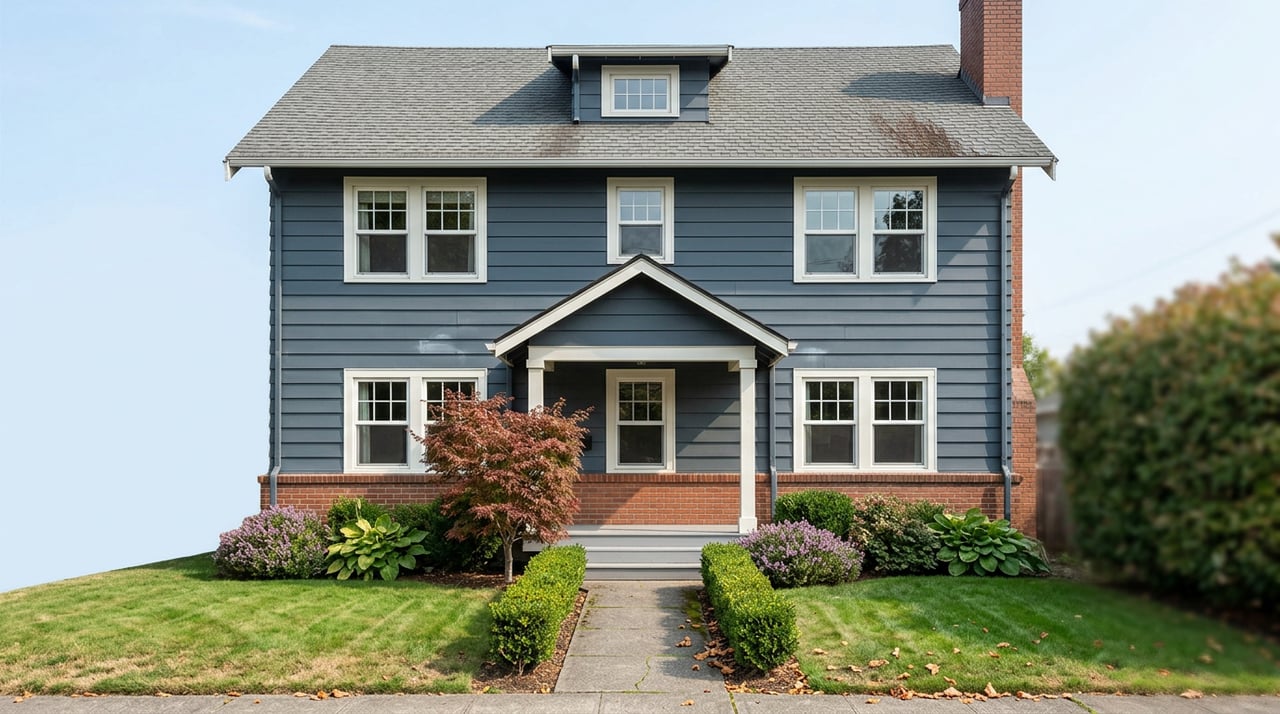
Forbes Avenue is the informal line locals use to separate the two sides of the neighborhood, and the housing stock backs it up more reliably than the pricing does. North of Forbes, along streets like Beechwood Boulevard, Wilkins, Aylesboro, and Inverness, lots run larger and the housing skews toward Tudor and Colonial-era estates with more separation between homes. South of Forbes, closer to the Murray Avenue business district, the stock is denser: brick foursquares and rowhouses on tighter lots along streets like Beacon, Phillips, and Hobart.
That physical difference, lot size and building type, is the more durable explanation for the price gap than any single index reading. It's also why the two portals can disagree on direction without either one being broken. A neighborhood of quarter-acre lots with low turnover behaves differently in a sold-price average than a neighborhood of closely spaced rowhouses that trade more often. The index captures the estate stock's slow appreciation. The sold-price average captures whatever happened to close in a given stretch, which in a thin market can look like a swing that isn't really there.
The Boundary Buyers Assume Isn't the Boundary That Governs Anything
Here's the part that surprises people who've already decided Forbes Avenue is the dividing line that matters. It isn't, at least not for the public school your household would be zoned into. Colfax K-8 serves students living in parts of Squirrel Hill, East Hills, Homewood, Shadyside, and Point Breeze, according to Pittsburgh Public Schools. That catchment doesn't respect the Forbes Avenue line at all. It reaches north into Shadyside and east into Point Breeze while also pulling from neighborhoods well outside the Squirrel Hill name entirely.
The lines that do exist in Squirrel Hill were mostly drawn by decades of neighborhood advocacy rather than by geography. The Squirrel Hill Urban Coalition, a resident-led nonprofit founded in 1972, has spent decades shaping exactly this kind of boundary work: successfully opposing a school district plan to stop busing students to Colfax from the western part of Squirrel Hill, and later working to reduce the density of the Beechwood Commons development. Those fights, not a street name, are why the catchment and the zoning look the way they do today. If you're choosing a home based on an assumption about which side of Forbes Avenue keeps you in a given school boundary, verify the actual catchment before you write an offer. It may not track the price map at all.
What This Means When You're Comparing Neighborhoods
If you're a relocating professional weighing Squirrel Hill against Shadyside or Point Breeze, don't anchor on a single median from either side of Forbes. Ask which measurement you're looking at and over what window, then ask separately whether the school catchment for a specific address matches the assumption you're making about "north versus south." Those are two different questions with two different answers, and conflating them is how buyers end up comparing the wrong things.
For investors, the same north-south split shows up in property type rather than just price. The multi-family stock, duplexes, triplexes, and the occasional legal quadplex, concentrates disproportionately in Squirrel Hill South, within walking distance of the Murray Avenue corridor. That's consistent with the denser lot pattern south of Forbes. It also means an investor comparing cap rates across Squirrel Hill and, say, Regent Square is really comparing a walkable multi-family submarket to a different housing mix entirely, not two versions of the same product.
None of this means the neighborhood is harder to buy into than the numbers suggest. It means the numbers require one more question before they're useful: which side, which source, which window. Once you ask that question, the two conflicting portals stop looking like a contradiction and start looking like two partial views of the same place, each useful once you know what it's actually counting.
A Few Direct Questions
If I'm comparing Squirrel Hill to Shadyside or Point Breeze, which price should I use? Neither in isolation. Note whether you're looking at a modeled value index or a trailing sold-price average, and whether the figure covers Squirrel Hill North or South. A north-side value index compared against a south-side sold-price average from a different neighborhood isn't a real comparison.
Does living north or south of Forbes Avenue determine which elementary school my child attends? Not automatically. Colfax K-8's catchment crosses into parts of Shadyside, Point Breeze, Homewood, and East Hills, so the Forbes Avenue line that separates the two pricing tiers doesn't line up with the school boundary. Confirm the specific address's assignment with Pittsburgh Public Schools before assuming.
If you're weighing Squirrel Hill against another East End neighborhood and want the numbers translated into what they actually mean for your specific search, that's the kind of groundwork the Allison Pochapin team does before you ever see a listing. Schedule a consultation and we'll walk through the real comparison, not just the headline median.